


Inside the fabrics, traditions and tiny details that distinguish exceptional black tie from an ordinary black suit
An interview with John Tellis, Founder of Germanicos Bespoke Tailors
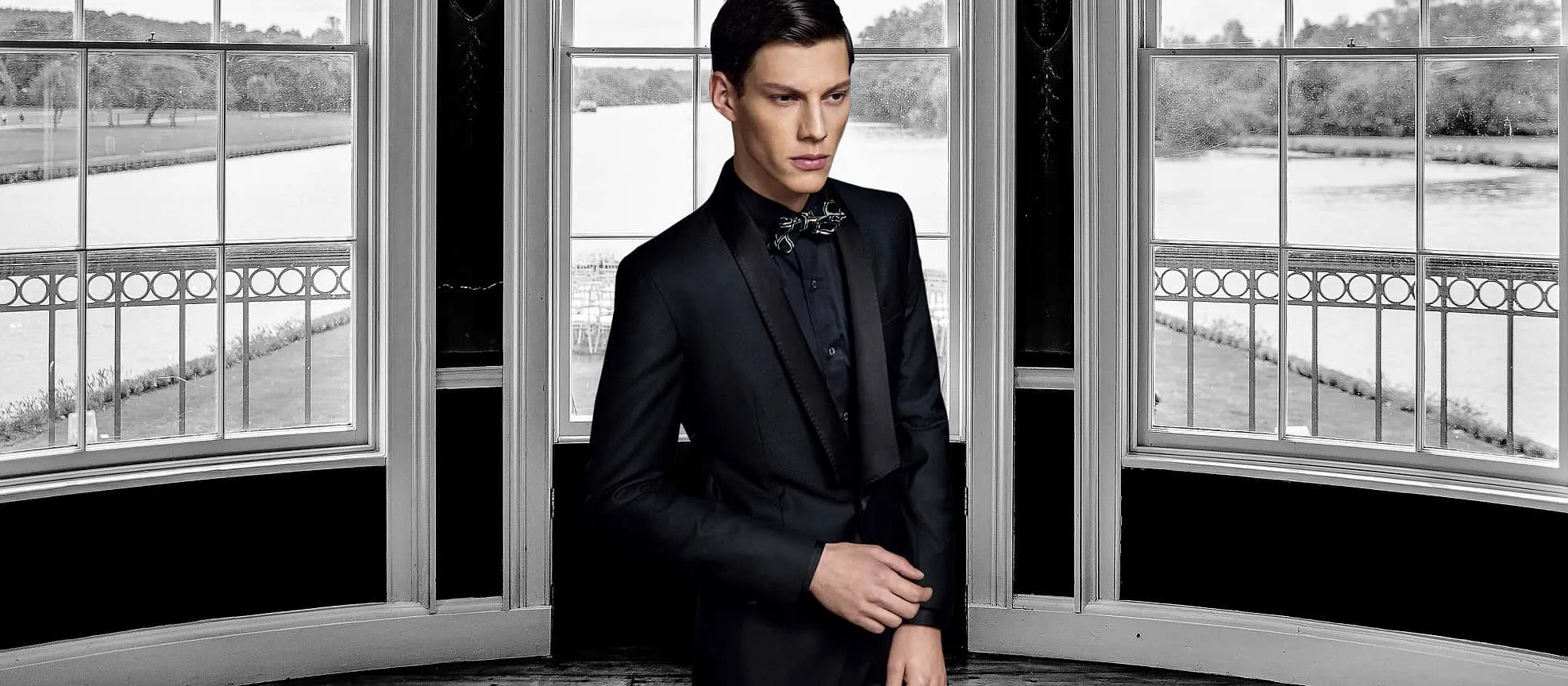
Few garments carry the ceremony of a dinner suit.
It is worn when something matters: a wedding, an awards night, a gala, a milestone celebration or an evening that will be photographed and remembered for years.
Yet many people approach black tie by doing the one thing least likely to produce an exceptional result: choosing the nearest black suit, adding a bow tie and hoping the details take care of themselves.
They rarely do.
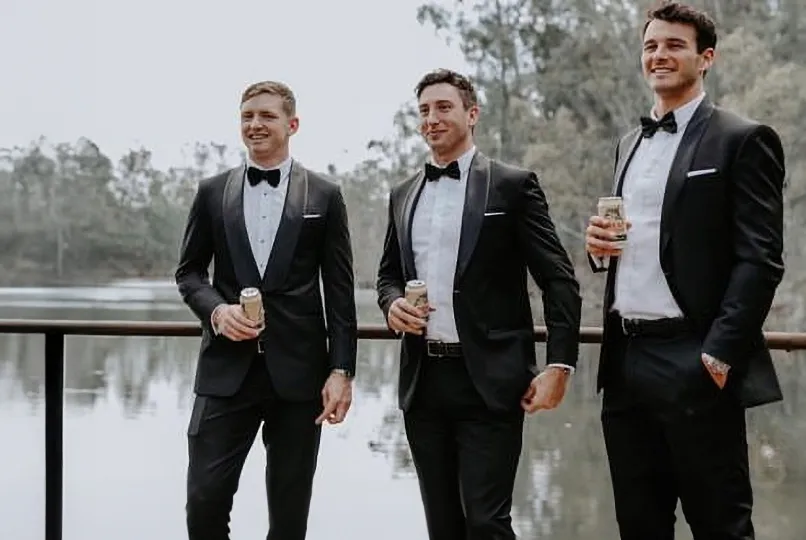
A true dinner suit is a composition. The jacket, lapels, internal structure, trousers, shirt, shoes and accessories must all work together – and, most importantly, they must work with the person wearing them.
To understand what separates memorable black tie from forgettable formalwear, we spoke with John Tellis, Founder of Germanicos Bespoke Tailors.
After more than 25 years creating dinner suits for thousands of Australian grooms, executives, entertainers, athletes and award winners, John has developed firm opinions about what works, what does not and why fit defeats almost everything else.
For clients preparing for a wedding or formal event, explore the complete Germanicos range of bespoke dinner suits.
For everyone else, consider this an uncensored conversation with a founder who has spent more than two decades noticing what most people miss.
1. Let us start with the obvious question: what is a dinner suit?
John Tellis: It is formal evening wear, normally distinguished by silk, duchesse satin or grosgrain on the lapels and other trimmings.
It is very similar to what Americans call a tuxedo. In Australia and Britain, dinner suit is the more traditional expression, but people now use both terms. We have explained the terminology more fully in our guide to the difference between a dinner suit and a tuxedo.
What matters is that it should not look like an ordinary business suit with a bow tie added at the last minute.
A proper dinner suit has its own architecture, proportions and language.
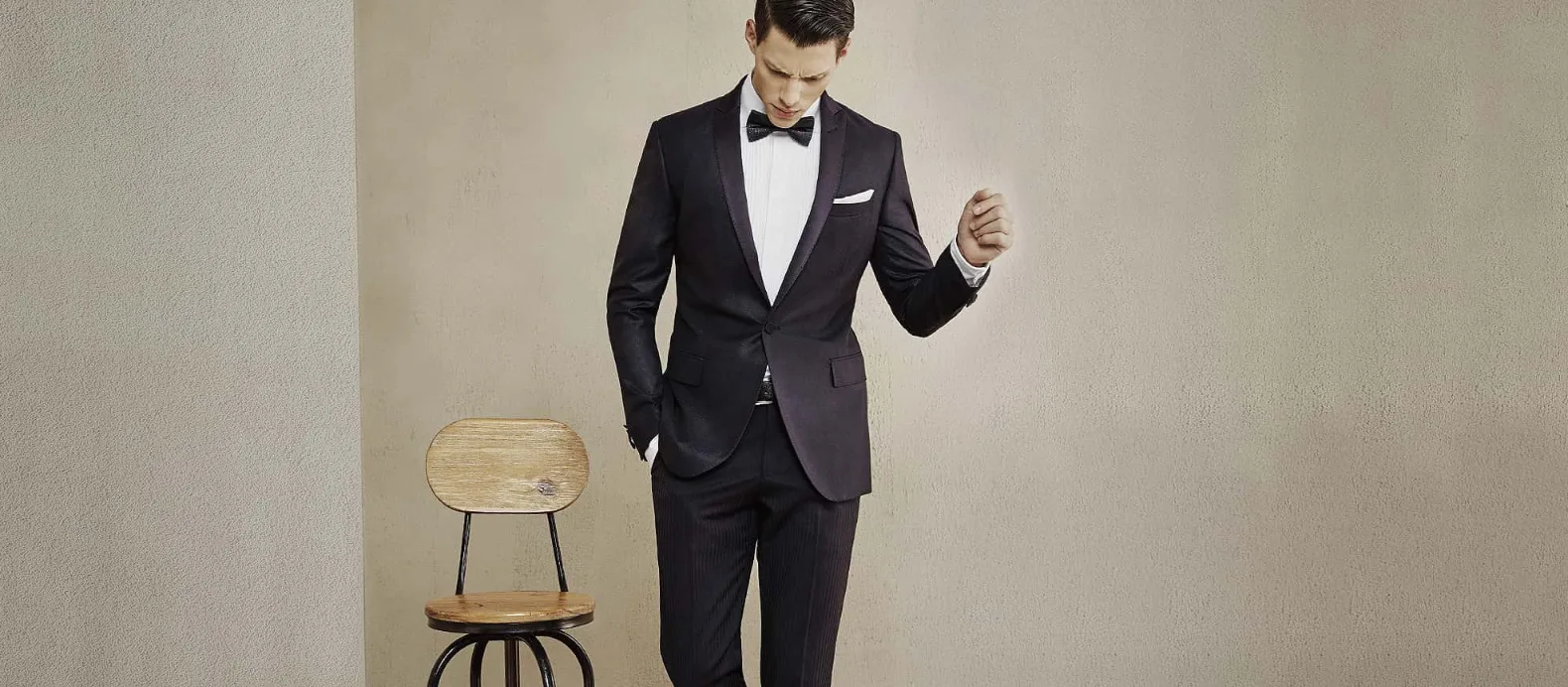
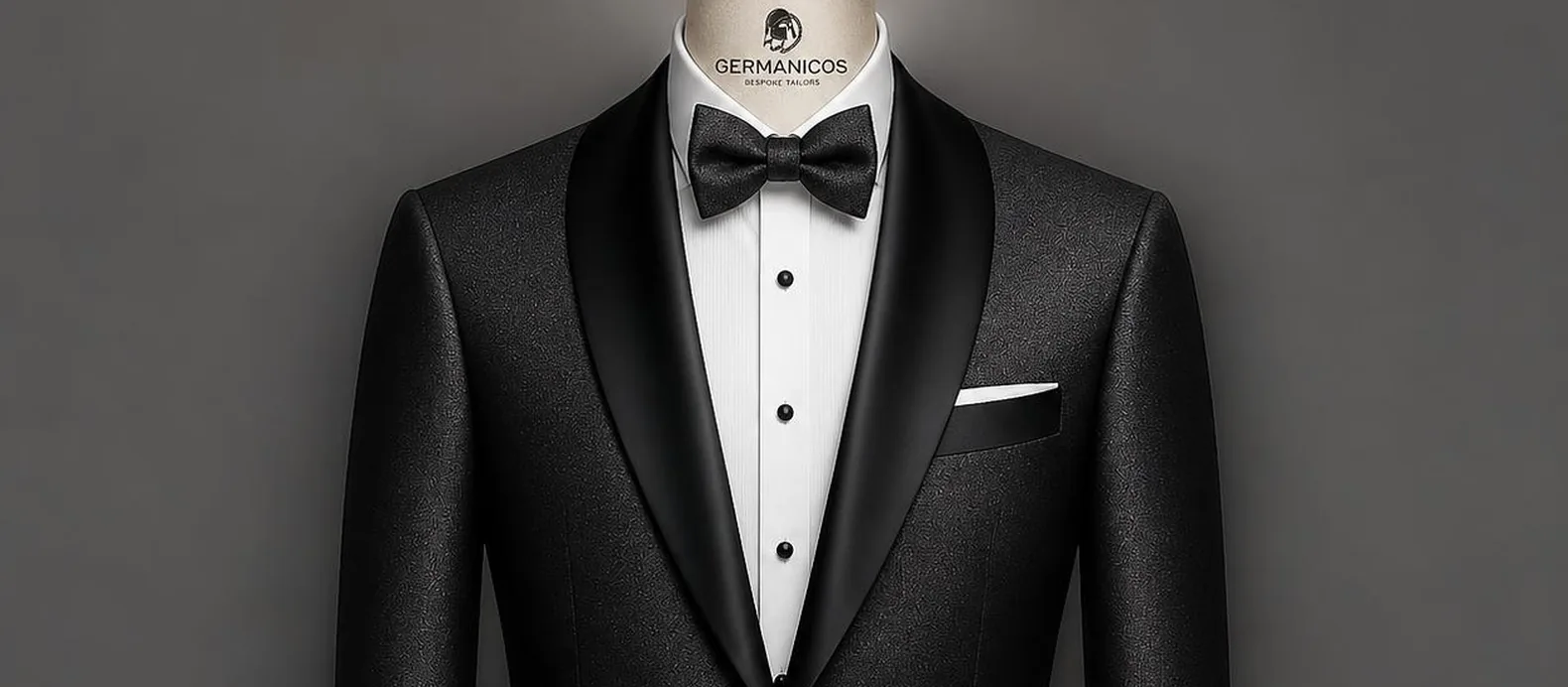
The lapels may be faced in grosgrain or satin. The buttons are normally covered. The pockets are clean and formal. The trousers may have a braid running down the side and should usually be worn without a belt.
Every element is intended to produce a cleaner evening silhouette.
2. Why does black tie continue to feel special?
John: Because it introduces ceremony.
Modern clothing has become increasingly casual. People attend restaurants, offices and even celebrations in clothing that would once have been reserved for weekends.
Black tie interrupts that.
When everyone makes the effort, the entire atmosphere changes. The room feels more important. The event feels more deliberate. People stand differently and carry themselves differently.
A dinner suit tells you that this is not an ordinary evening.
That is why it works so well for black-tie weddings, gala dinners, awards ceremonies, charity balls, the opera and New Year’s Eve celebrations. It elevates both the wearer and the occasion.
3. Of all the decisions involved, what matters most?
John: Fit. Hands down.
Most dinner jackets are black or extremely dark. Yes, we may have more than 500 different black fabrics available, but stand five metres away and many jackets will initially look similar.
The difference is how they sit on the person.
Does the jacket clean up the shoulder line? Does it make the wearer look taller? Does it shape the waist without pulling? Does the collar stay connected to the neck? Do the trousers create one continuous line rather than collapsing around the shoes?
That is where the real impact is created.
A beautiful fabric cannot rescue poor posture balance, incorrect shoulders or a jacket that fights the person wearing it.
I often say that tightness is not fit. Plenty of garments are tight. Very few are genuinely balanced.
4. What do you mean when you say a garment is “balanced”?
John: A jacket has to work with the body in three dimensions.
It must look correct from the front, but also from the side and back. It must account for the angle of the shoulders, the position of the arms, the shape of the chest and the way the client naturally stands.
Two men may have exactly the same chest and waist measurements and require completely different patterns.
One may stand erect. The other may lean forward. One may have square shoulders. The other may have a significant slope. One arm may hang farther forward than the other.
Those differences determine how the cloth falls.
When the balance is right, most people cannot explain why the person looks good. They simply see someone who appears taller, leaner and more confident.
That is tailoring working quietly.
5. Is this where bespoke differs from made-to-measure?
John: Yes.
Made-to-measure usually begins with an existing pattern. The measurements are entered and the standard pattern is altered within certain parameters.
Bespoke begins with the client.
We study the individual body, posture, proportions and movement and create the pattern around those characteristics.
It is the difference between modifying a house that already exists and designing a house for the land on which it will be built.
I have always compared tailoring to architecture. We look at the block of land and imagine what structure will create the best result.
We do not force every client into the same visual formula. That individual approach – from consultation and pattern development through to fittings – is central to the Germanicos bespoke tailoring process.
6. You have hundreds of black fabrics. Can black really vary that much?
John: Dramatically.
People assume black is simply black because they have only ever seen a limited retail selection.
In reality, black fabrics differ in weight, weave, composition, depth, lustre and texture.
You can have a completely matte black wool, a wool-and-silk cloth with controlled shine, mohair that catches the light differently, velvet, cashmere blends, subtle jacquards and patterns that only become visible as the wearer moves.
Some cloths look soft. Some look sharp. Some create an almost liquid surface beneath evening light.
Even before we discuss midnight navy, ivory, velvet or patterned dinner jackets, black alone offers enormous possibilities.
The skill is not presenting the client with 500 options and leaving him confused. It is understanding the event, complexion, body and personality, then narrowing the selection intelligently.
7. What colour would you choose instead of black?
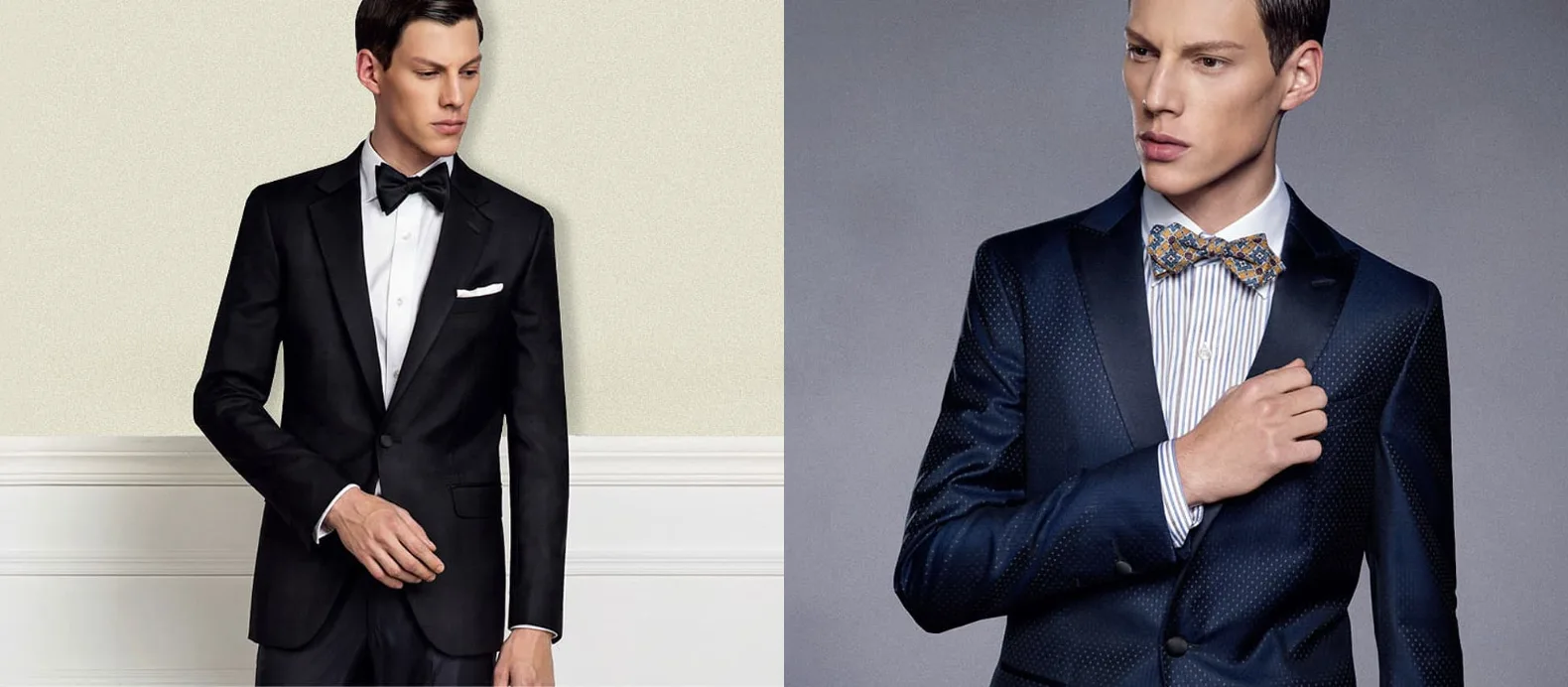
John: An extremely dark midnight navy bordering on black.
Under normal light it can appear black, but in evening lighting it often has greater depth and richness.
It also works beautifully with black grosgrain lapels because there is just enough tonal contrast to make the details visible.
It is individual without becoming loud.
A client may walk into the room and nobody immediately thinks, “He is wearing a blue suit.” They simply see that the garment has more dimension.
That, to me, is intelligent individuality.
8. What about white or ivory dinner jackets?
John: They can be fantastic, particularly for summer weddings, destination celebrations, cruises and warmer climates.
But the precise shade matters.
A very stark white can be harsh against a pale complexion. Sometimes ivory, cream or a warmer tone produces a much stronger result.
It should normally be worn with black formal trousers rather than matching pale trousers.
The occasion also has to support it. An ivory dinner jacket at the right venue feels sophisticated. At the wrong event, it can feel theatrical.
Context is everything.
9. Shawl lapel or peak lapel – which do you prefer?
John: I like both. I generally would not choose a notch lapel for a true dinner suit because it belongs more naturally to an ordinary lounge or business jacket.
A shawl lapel produces a continuous, flowing line. It is elegant, clean and unmistakably associated with evening wear.
A peak lapel has more power. It directs the eye upward, adds strength to the shoulder area and can create a more commanding effect.
The decision should not be made by looking at an isolated photograph.
We consider the client’s shoulder slope, chest, height, torso, head and face. We then control the lapel width, angle and position so it belongs to that person.
A lapel that looks spectacular on one man can overwhelm another. Readers who want to see more styling directions can also explore our bespoke tuxedos.

10. Describe the dinner suit you would design for yourself.
John: I would use an extremely dark navy cloth – almost black – with high lustre and a very subtle pattern that you could not walk into a shop and buy.
I would select something from a leading English or Italian cloth house, perhaps Dormeuil or ZEGNA.
The jacket would have a broad shawl lapel with black grosgrain facing. At the bottom, I would shape it with a slightly squared-off finish, similar in spirit to some of the Tom Ford shawls.
The buttons would also be covered in grosgrain.
I would wear high-waisted trousers with a deeper waistband, two side-adjuster buckles and two forward pleats. I like approximately three-quarters of an inch of overlap because it gives the trousers presence and produces a beautiful line.
Then I would finish it with shiny black patent leather shoes.
Nothing would be outrageous, but nobody else in the room would own the same garment.
11. How do you encourage clients to be adventurous without allowing the result to become excessive?
John: By controlling where the personality appears.
You do not need an unusual colour, exaggerated lapels, a bold pattern, a loud lining and unusual accessories all fighting each other.
Choose one or two elements to carry the individuality.
It may be the texture of the cloth. It may be an extraordinary lapel shape. It may be midnight navy with black grosgrain. It may be a velvet jacket with everything else kept disciplined.
Many clients arrive believing there are only a handful of possible dinner suits. Once they see the cloths and styling possibilities, they are amazed.
We encourage them to create something that no shop could offer – but it still has to be classy.
The ultimate test is whether the client will look at the photographs in ten years and still feel proud of the decision.
12. How does Germanicos’ 3D design technology change the consultation?
John: It helps the client see the possibilities before the garment exists.
A small fabric swatch can be difficult to interpret. The client may struggle to imagine how a particular lapel, pocket or button combination will look across a completed jacket.
Our in-house 3D design system allows the dinner suit to develop visually during the consultation.
We can explore shawl and peak lapels, different widths, satin or grosgrain facings, jacket colours, buttons, pockets, waistcoats, trousers and other details.
It makes the process interactive and enjoyable.
The technology does not replace the tailor. It gives us a clearer way to communicate tailoring decisions to the client.
The screen can display an option. Experience tells us whether that option will actually flatter the individual. Clients can explore the design possibilities further on our bespoke dinner suits page.
13. What dinner-suit details do tailors notice that other people usually miss?
John: We look first at the collar and shoulders.
Does the collar remain against the neck? Does the shoulder finish cleanly? Does one sleeve hang differently from the other? Do the vents remain closed when the wearer is standing naturally?
Then we look at the proportions.
Is the jacket the right length? Is the button position flattering? Is the lapel too narrow for the chest? Do the trousers begin high enough to connect properly with the jacket?
We also notice the sleeve buttonholes.
Working buttonholes are sometimes called surgeon’s cuffs. They are not absolute proof of bespoke tailoring because some ready-made brands now include them, but their placement and finishing still tell an experienced eye a great deal about how the garment was made.
The public may see one black jacket. A tailor sees dozens of individual decisions.
14. Is hiring a dinner suit ever a good idea?
John: It can serve a budget or emergency, but it comes with an unavoidable compromise.
A hire suit has to fit many bodies approximately. It is designed for repeated wear and adjustment, not for one client’s posture.
That can mean broad shoulders, low armholes, excess cloth through the back, sleeves that are too long and trousers sitting in the wrong position.
The worst time to feel uncomfortable about your clothing is during one of the most photographed and emotionally important events of your life.
A bespoke dinner suit can remain in the wardrobe for decades and be worn to weddings, galas, awards nights and formal celebrations.
The initial investment is greater, but you own something made specifically for you rather than repeatedly paying to borrow an average approximation.
For a more detailed comparison, read our article on whether hiring a wedding suit is a good idea.
15. Of all the dinner suits you have created, which occasion remains most memorable?
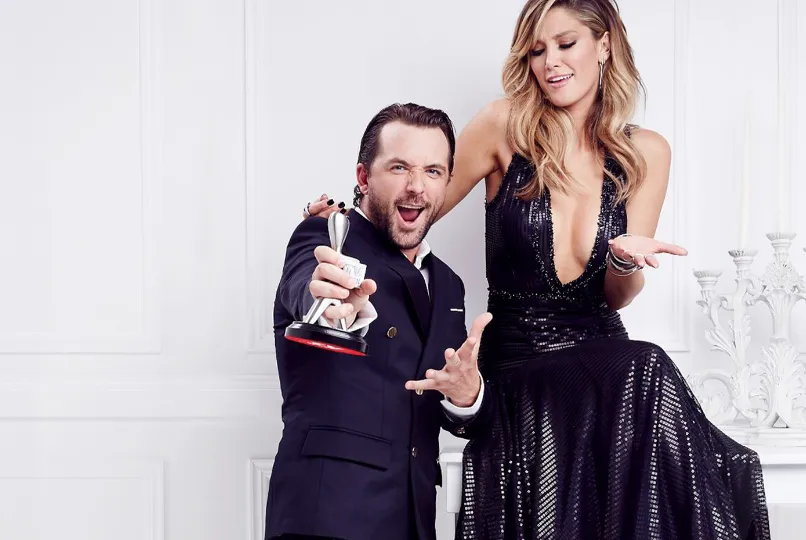
John: I have made dinner suits and formalwear for people including Hugh Jackman, Ronan Keating and Ruby Rose, as well as thousands of exceptional grooms, footballers, executives and award winners.
But one of the nights that stays with me was Geoffrey Edelsten’s wedding to Brynne.
It was described at the time as one of the most expensive weddings in Australian history. There were famous performers and personalities everywhere.
During his speech, among all those people, Geoffrey thanked me – his tailor.
Then he thanked me a second time.
I do not think he thanked anybody else twice.
It was very funny, but also genuinely meaningful. A tailor works behind the scenes. You spend weeks or months trying to ensure a client feels extraordinary for a particular moment.
When the client remembers that, it means the work mattered.
The Final Word: Do Not Dress Down the Important Moments
A dinner suit is rarely commissioned for an ordinary day.
It is made for the evening you will remember, the photographs your family will keep and the room in which you want to feel entirely confident.
That is why John’s final advice is simple:
“Do not skimp on your special occasion. Invest in a bespoke dinner suit that can last for decades and make you feel even more confident on the most important days of your life.”
Tradition determines the broad rules of black tie.
The individual determines everything that makes the garment memorable: the proportion, posture, cloth, lapel, construction and personality.
The best dinner suit does not merely fit the dress code. It fits the person.
Ready to Design Your Dinner Suit?
Explore hundreds of black, midnight-blue, velvet and luxury evening fabrics, visualise your design using Germanicos’ proprietary 3D technology and commission a dinner suit created around your individual posture and proportions.
View bespoke suit pricing | Book a consultation
Appointments are available in Melbourne, Brisbane, Perth and Canberra.
 1300 TAILOR (824567)